Choosing the right metal pneumatic fittings is crucial for ensuring efficiency and safety in industrial applications. For instance, Michael Thompson, a leading expert in the pneumatic systems industry, emphasizes, "The right fittings can significantly impact performance and longevity." His insights underline the importance of selecting appropriate components for specific needs.
Metal pneumatic fittings serve various functions, making informed choices essential. These fittings come in multiple shapes and sizes, making awareness of their applications critical. Selecting the wrong metal material or size can lead to leaks or system failures, often with costly consequences.
Understanding the needs of your system is a nuanced process. Factors like pressure ratings, environmental conditions, and connection types all play a role in the selection process. Reflecting on past mistakes can help, as some users have faced complications after making hasty decisions. By considering expert advice and taking time for reflection, users can make better-informed choices in their pneumatic systems.
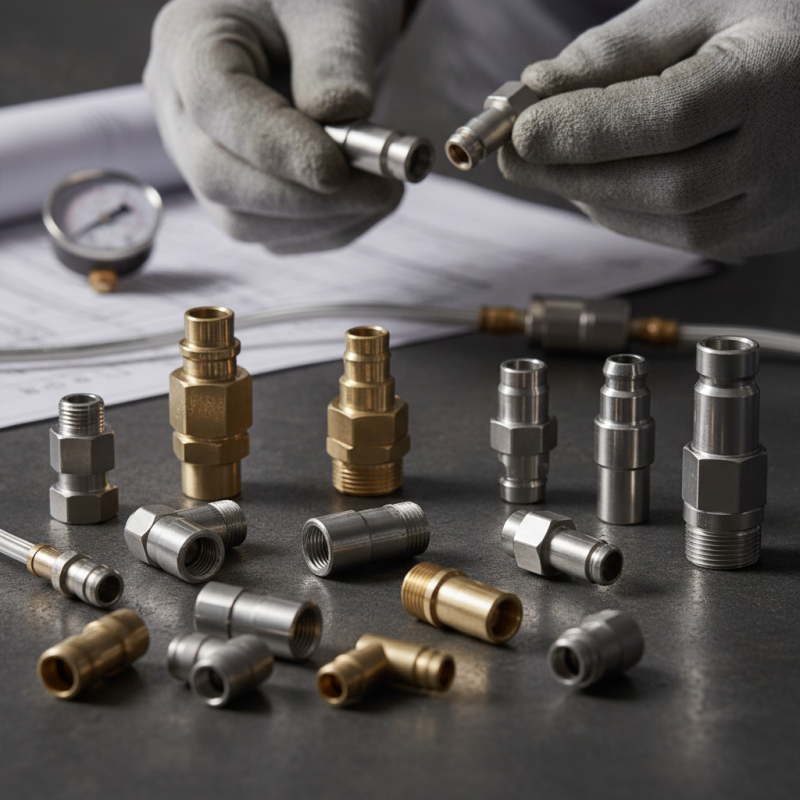
Metal pneumatic fittings are essential components in various pneumatic systems. Their primary function is to establish a secure and leak-free connection. The effectiveness of these fittings often hinges on the materials used. Common materials include stainless steel, brass, and aluminum. Each material offers distinct advantages and limitations. According to industry reports, stainless steel fittings exhibit excellent corrosion resistance, making them suitable for harsh environments. In contrast, brass fittings are often favored for their affordability and durability.
When selecting metal pneumatic fittings, consider pressure ratings and temperature ranges. High-quality fittings can withstand extreme conditions. Data shows that fittings made from stainless steel can handle pressures up to 300 psi at elevated temperatures. However, they are also prone to galling if not properly lubricated. On the other hand, aluminum is lightweight but may not offer the same structural integrity under high pressure. Understanding these nuances is crucial for ensuring long-term reliability and efficiency in pneumatic systems.
The design and finish of the fittings also play a significant role. Smooth surfaces help reduce friction, improving flow rates. A report from the Pneumatics Association highlighted that even small variations in the fitting design can lead to energy loss in a system. Therefore, attention to detail in both selection and installation is critical for optimal performance. A fitting chosen for its appearance alone may not perform well in practical applications, indicating the importance of informed decision-making in this industry.
Metal pneumatic fittings are essential in various industries, serving as connective components in systems that use compressed air. They come in several types:
straight fittings,
elbows,
tee fittings, and
quick couplings, among others. Each type fulfills a specific role, impacting system performance. For instance,
elbows can change air direction while minimizing flow loss, crucial in compact spaces.
According to industry reports, the market for metal pneumatic fittings is projected to grow significantly, with a
CAGR of around 5.2% through 2026. This growth reflects an increasing demand for reliable and efficient air transfer systems across manufacturing, automotive, and construction sectors. However, users need a clear understanding of the fitting materials and configurations available to maximize their systems' efficiency.
When selecting fittings, consider factors such as material composition and pressure ratings.
Stainless steel offers durability and corrosion resistance, ideal for harsh environments. Although options can be overwhelming, understanding system requirements helps narrow choices. Reflection on past failures, like using inappropriate fittings, can guide better future decisions. Suitable materials not only extend longevity but also enhance performance and safety.
Choosing the right metal pneumatic fittings is crucial for efficiency and safety. Several factors come into play during the selection process. Start with the material type. Stainless steel and brass are common choices. Both have unique strengths. Stainless steel offers corrosion resistance, while brass is more affordable and easier to machine. Determining the working environment can guide this decision.
Next, consider pressure ratings. Different fittings handle varying pressure levels. Regular testing is essential to ensure they meet your needs. Look into compatibility with existing systems. Mismatched fittings can lead to failures. Finally, size matters. A fitting that is too large or small diminishes performance. Measure the required size accurately for optimal operation. It’s easy to overlook details. However, these small elements hold significant weight in pneumatic systems. Engaging with a specialist can help clarify any doubts and enhance decision-making.
Metal pneumatic fittings play a vital role in many industries. They provide secure connections in systems that rely on compressed air. Common applications include automotive, manufacturing, and construction sectors. According to a report from Research and Markets, the global pneumatic fittings market is expected to grow steadily, reaching over $10 billion by 2027. This growth indicates a rising demand for reliable fitting solutions across various applications.
In automotive manufacturing, metal pneumatic fittings ensure efficient operation of machinery and tools. They are crucial for systems that require high pressure and strong durability. For instance, in assembly lines, these fittings connect pneumatic tools that help in precision tasks. In construction, they facilitate the use of heavy machinery. This enhances productivity, making it essential to choose the right fitting.
A challenge arises when selecting the appropriate fittings. With various materials and designs available, it can lead to confusion. The right choice depends on application specifics, including pressure, temperature, and environment. A mismatch can result in leaks, reduced efficiency, or even equipment failure. Thus, understanding your application thoroughly is essential for appropriate selection.
Proper maintenance of metal pneumatic fittings is critical for ensuring their longevity and performance. Research shows that nearly 30% of pneumatic system failures are linked to improper maintenance. Regular inspections can help identify wear and tear early on. Checking for leaks is vital. Even a small leak can lead to a significant drop in efficiency, costing companies both time and money. Incorporate regular pressure tests to ensure your fittings are performing correctly.
Cleaning is equally essential. Dust and debris can clog fittings, leading to operational issues. Use appropriate cleaning agents and tools, but avoid harsh chemicals that can corrode metal surfaces. A yearly deep cleaning can prevent buildup that shortens the lifespan of fittings. Moreover, tight connections are crucial. Loose fittings can cause vibration over time, which compromises the integrity of the seal. Always ensure fittings are secured to the manufacturer’s torque specifications.
Training staff on proper handling techniques during installation and removal can prevent damage. Studies indicate that training can reduce fitting failure rates by up to 25%. Additionally, consider environmental factors. Humidity and temperature fluctuations can affect fitting performance. Implementing strategies to control these factors can further extend the life of your pneumatic system.
This bar chart illustrates the importance of various criteria when choosing metal pneumatic fittings. Each criterion is rated on a scale from 1 to 10, with 10 being the most critical. The data highlights that pressure rating and corrosion resistance are the most important factors, followed closely by material quality.
: They create secure, leak-free connections in pneumatic systems.
Stainless steel, brass, and aluminum are common choices.
They have excellent corrosion resistance and can handle high pressures.
Brass is often more affordable and durable, making it budget-friendly.
Smooth surfaces reduce friction and improve flow rates, enhancing efficiency.
Different fittings can handle various pressure levels; regular testing ensures safety.
An incorrectly sized fitting can significantly diminish pneumatic system effectiveness.
Mismatched fittings can lead to failures and inefficiencies in the system.
Yes, choosing based solely on appearance may result in poor practical performance.
Small oversights can lead to significant efficiency losses in pneumatic systems.
When selecting Metal Pneumatic Fittings, it's essential to understand their key characteristics and the materials commonly used in their construction. These fittings play a vital role in pneumatic systems, and knowing the different types available helps in making informed decisions. Several factors must be considered when choosing the right fittings, including compatibility with existing equipment, pressure ratings, and environmental conditions.
Metal Pneumatic Fittings find widespread applications across various industries, from manufacturing to automotive, due to their strength and reliability. To ensure a long lifespan and optimal performance, regular maintenance is crucial. By following proper maintenance tips, users can enhance the durability of their Metal Pneumatic Fittings, ultimately leading to more efficient operations and reduced costs.

Nuoheng